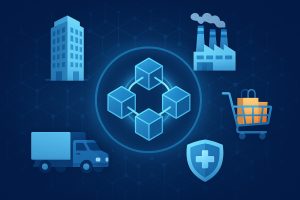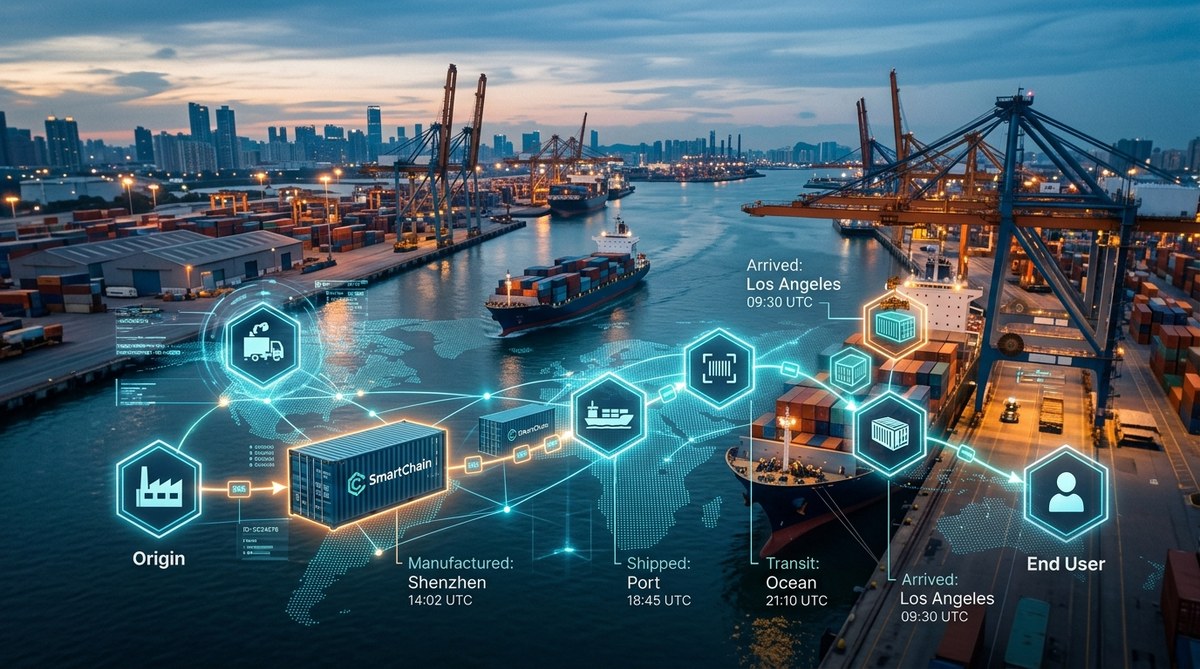
Imagine a world where every step a product takes from creation to consumer is recorded in an immutable, easily auditable ledger. A ledger that anyone with permission can read, yet only trusted participants can write to. That is the promise of blockchain powered supply chain transparency. For businesses, this means better traceability, reduced risk, faster recalls, and stronger trust with customers and partners. For developers and engineers, it means new ways to design interoperable systems, automate processes, and unlock data driven insights without compromising security. On SmartChain.cc we see supply chain transparency as a foundational use case that unites technology, operations, and market strategies around the evolving world of SCC tokens and blockchain enabled logistics.
The promise of blockchain for supply chain transparency
Blockchain technology is frequently described as a shared, tamper resistant ledger. When applied to supply chains, it changes how data about products is created, stored, and verified. The outcome is a more transparent ecosystem where stakeholders can access a consistent record of provenance, movement, and custody without relying on a single, centralized party.
How blockchain enhances traceability and provenance
- Immutable records: Each event in a product journey—production, packaging, shipping, receiving, testing, and retail handoffs—can be time stamped and cryptographically linked to the previous entry.
- Tamper resistance: Once data is written, altering it requires network consensus and broad agreement, making fraud more difficult and easier to detect.
- End to end visibility: All authorized participants see the same version of the truth, reducing information asymmetry and disputes.
- Provenance assurance: Consumers and regulators can verify product origins, materials, and compliance history with minimal manual intervention.
Why transparency benefits the bottom line
- Faster problem resolution: When a defect or recall occurs, stakeholders can quickly locate affected lots and isolate the issue.
- Reduced counterfeit risk: Immutable provenance makes it harder for fake or misrepresented products to enter the market.
- Improved financing and loyalty: Clear, auditable data streams support more efficient financing, dynamic pricing, and enhanced consumer trust.
- Operational excellence: Real time data supports demand planning, inventory optimization, and supplier performance management.
The role of digital identities and permissions
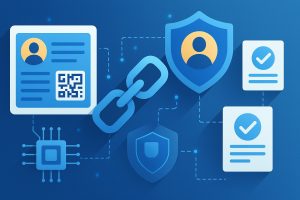
- Trusted participants: Blockchain networks use digital identities to control who can read or write data, aligning access with role based permissions.
- Compliance aware: Data sharing can be restricted to necessary parties while maintaining a verifiable audit trail.
- Privacy by design: Privacy preserving techniques enable sharing essential provenance without exposing sensitive business information.
How blockchain improves supply chain outcomes
Current landscape and practical capabilities
- Real time settlement and settlement speed: Blockchains can accelerate settlement between partners by providing an auditable, near real time ledger of transactions.
- Data standardization: Smart contracts and standardized data schemas encourage consistent data capture across suppliers, manufacturers, logistics providers, and retailers.
- Reduced reconciliation overhead: A single truth helps eliminate duplicative data entry and reconciliation tasks.
- Enhanced risk management: Transparent data flows reveal bottlenecks, single points of failure, and compliance gaps.
What to expect in adoption journeys
- Phased pilots: Most organizations start with a narrow scope, such as a single product line or a key supplier, before expanding to full network participation.
- Governance models: Successful projects define clear roles, consensus mechanisms, and dispute resolution procedures to keep the ecosystem healthy.
- Interoperability focus: As networks form, cross chain and cross platform interoperability become critical to avoid silos.
Common benefits across industries
- Food and agriculture: Provenance tracking for freshness, farming practices, and batch recalls.
- Pharmaceuticals: Tamper resistant chain of custody for critical medicines.
- Consumer electronics: Verification of components and ethical sourcing.
- Automotive and manufacturing: End to end tracking of parts, warranties, and recalls.
Real world use cases of blockchain in supply chains
Case studies and learnings
- Food safety and traceability
- Use case: Tracking produce from farm to table to rapidly identify contamination sources.
-
Benefit: Reduced time to trace back and contain outbreaks; improved consumer safety and regulatory compliance.
-
Pharmaceutical integrity
- Use case: Verifying drug provenance, batch data, and distribution chains to combat counterfeit medicines.
-
Benefit: Increased patient safety and compliance with stringent regulatory requirements.
-
Luxury goods authentication
- Use case: Recording the journey of high value items to prove authenticity and prevent fake resale.
-
Benefit: Enhanced brand protection and consumer trust.
-
Electronics supply chain
- Use case: Capturing supplier certifications, material sourcing, and component provenance for complex assemblies.
-
Benefit: Improved recall readiness and ethical sourcing verification.
-
Automotive parts and maintenance
- Use case: Tracking parts through manufacturing, dealership networks, and service history.
- Benefit: Streamlined recalls, better warranty analytics, and improved customer experience.
Industry examples and takeaways
- Large enterprises often lead with governance, risk management, and compliance in mind, ensuring that the network remains trustworthy for all participants.
- Small and medium sized suppliers gain access to broader markets as the ecosystem proves its reliability and reduces friction in onboarding.
- Public sector and regulators increasingly expect transparent data trails for high risk products, driving adoption for compliance and safety outcomes.
Implementation considerations and a practical playbook
6 key steps to a blockchain powered supply chain
- Define the problem and scope
- Identify a measurable outcome such as recall speed, counterfeit reduction, or inventory accuracy.
-
Map current processes and data flows to determine where blockchain adds value.
-
Choose a governance model
- Decide who participates, who validates data, and how disputes are resolved.
-
Establish data sharing policies and access controls suited to the risk profile of the network.
-
Design data standards and data quality controls
- Agree on data schemas, event types, and unit measurements to enable interoperability.
-
Implement validation rules and data quality checks to minimize garbage in the system.
-
Select a technology stack
- Assess whether a permissioned blockchain is appropriate for the network and regulatory needs.
-
Consider smart contracts for automation, oracles for external data, and secure identity management.
-
Pilot with a scalable approach
- Start with a focused use case and a limited number of participants.
-
Measure outcomes against defined KPIs such as lead time, recall containment, and data accuracy.
-
Scale and govern for the long term
- Extend network participation while maintaining performance and governance rigor.
- Invest in standards adoption, interoperability, and ongoing training for participants.
Technical considerations and best practices
- Data minimization: Only share data that is necessary for the process and compliance requirements.
- Privacy preserving techniques: Employ cryptographic methods to protect sensitive information while preserving auditability.
- Smart contracts: Use automated business logic for processes like approvals, payments, and alerts.
- Oracles: Integrate trusted external data sources for environmental conditions, lab results, or regulatory checks.
- Interoperability standards: Align with industry norms and cross chain messaging to enable collaboration across ecosystems.
Common challenges and how to address them
- Technical complexity: Invest in a phased approach, clear technical documentation, and developer resources.
- Integration with legacy systems: Use APIs and middleware to bridge ERP, WMS, MES, and other platforms with the blockchain layer.
- Cost and ROI uncertainty: Start with measurable pilots and build a business case around risk reduction and efficiency gains.
- Regulatory and data privacy concerns: Design with privacy by default and ensure governance aligns with local laws and industry norms.
Data privacy and security notes
- Permissioned access: Ensure only authorized participants can view sensitive data.
- Auditability without exposure: Use hashed data proofs and selective disclosure to verify information without leaking confidential details.
- Regular security reviews: Conduct penetration testing, third party audits, and continuous monitoring to maintain trust.
The role of SmartChain and SCC tokens in supply chain transparency
SmartChain.cc focuses on SCC token news and blockchain technology, including supply chain transparency as a core use case. Tokens can enable novel governance and incentive mechanisms within supply chains, support micropayments for data sharing, and create incentive structures for participants to maintain data quality. In practice, SCC tokens can help:
- Align incentives for data sharing and quality control
- Fund ongoing governance and network maintenance
- Facilitate microtransactions for access to premium datasets or verified certifications
- Support smart contract driven automation across partners
Practical patterns for SCC token integrations
- Tokenized access: Grant permission to read or write data based on token holdings or staking.
- Token rewards for quality data: Reward participants who submit timely, accurate, and verifiable data with SCC tokens.
- DeFi style financing for suppliers: Facilitate working capital or supplier financing using token based collateral and smart contracts.
Regulatory, governance, and standards considerations
- Compliance alignment: Blockchain projects should align with food safety, pharmaceutical traceability, and consumer protection regulations where applicable.
- Industry standards: Pursue common data schemas and event definitions to improve interoperability with other networks.
- Governance transparency: Publish governance models, participation rules, and dispute resolution procedures to build trust among participants and regulators.
- Data sovereignty: Ensure data localization where required and avoid unnecessary data transfer across borders.
Realistic expectations: what blockchain can and cannot do
- It is not a silver bullet for every process. Blockchain excels at creating a shared, trustworthy record for data that moves across organizational boundaries.
- It works best when paired with traditional data quality programs, change management, and a strong focus on process optimization.
- It complements digital identity verification, supply chain financing, and trust building among partners.
Future outlook and strategic value for supply chains
- Increased collaboration: As networks mature, more suppliers, logistics providers, and retailers will participate, driving broader benefits.
- Regulatory compliance and recalls: Faster, more reliable recall processes will become a competitive differentiator.
- Ethical sourcing and consumer trust: Transparent provenance supports responsible production and stronger brand loyalty.
Practical guidance for readers of SmartChain.cc
- Stay informed about SCC token developments that support governance and data sharing within supply chains.
- Follow real world pilots and case studies to extract actionable lessons for your organization.
- Build a long term roadmap that aligns technology choices with business goals, including interoperability and standards adoption.
Quick summary of key takeaways
- Blockchain supply chain transparency brings immutable provenance, end to end visibility, and risk reduction.
- Real world use cases span food safety, pharmaceuticals, luxury goods, electronics, and automotive parts.
- A disciplined implementation playbook, governance, data standards, and privacy considerations are essential for success.
- SCC tokens can enable new incentives, governance, and financing mechanisms to accelerate adoption.
- Regulatory alignment, interoperability, and continuous improvement will shape the next era of supply chain transparency.
Conclusion
Supply chain transparency powered by blockchain represents a practical, scalable path to more trustworthy, efficient, and resilient operations. By recording product journeys in an immutable ledger, organizations reduce the guesswork that often slows down recalls, optimizes inventory, and improves collaboration with partners. At SmartChain.cc we believe the future of supply chain management lies in thoughtful deployment, strong governance, and the intelligent use of SCC tokens to align incentives and unlock new value. If your organization is exploring how to increase transparency, start with a focused pilot, define clear metrics, and build a roadmap that scales across your network. The journey may be complex, but the payoff is a more trusted, agile, and competitive supply chain.