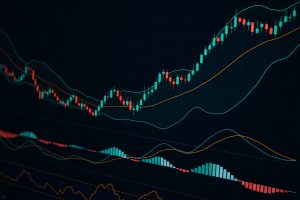
Bitcoin price often gets treated like a scoreboard. Green means success. Red signals trouble. Yet Bitcoin runs without a central bank, a company, or a command center. That raises a fair question. What actually moves its price if no one controls it?
For many readers, the easiest reference point is the current bitcoin price. It updates in real time and reflects what buyers and sellers agree on at that moment. Still, that number is not a switch someone flips. It is the result of millions of small decisions spread across the network.
Understanding how those decisions form price helps developers, investors, and everyday users see Bitcoin as a system, not a slot machine. Price becomes a signal. It shows how the network behaves under real world pressure.
Quick summary
Bitcoin price forms through rules and behavior, not central control. Fixed supply sets boundaries, while usage and liquidity shape daily movement. Macro conditions, regulation, and trust also influence how capital flows in and out. No single factor explains price on its own.
Supply rules and issuance constraints
Bitcoin starts with math. The protocol limits supply to 21 million coins. No committee can change that rule during a crisis or election year. New bitcoin enters circulation through block rewards paid to miners. These rewards fall roughly every four years during halving events.
This schedule creates long term pressure because supply growth slows over time. Everyone can see the calendar. There are no surprises. That predictability stands in sharp contrast to fiat systems where issuance expands based on policy decisions.
Still, scarcity alone does not push prices upward. A rare item without users holds little value. Bitcoin supply rules define boundaries, yet demand must fill that space. Price only moves when people act on those rules.
Network activity and on chain usage
Bitcoin lives on its ledger. Each transaction records economic intent. Some transfers represent payments. Others settle trades or move funds between wallets. Watching this activity reveals how the network gets used beyond headlines.
Higher transaction volume often reflects growing utility. Active addresses show how many participants interact with the system. Together, these metrics suggest whether Bitcoin functions as infrastructure or just a speculative asset.
Interpreting this data requires context. Raw numbers mislead without understanding what flows represent. Articles on understanding blockchain data explain how to separate real usage from noise. Price responds more reliably to sustained activity than to short bursts driven by hype.
Liquidity, exchanges, and market access
Bitcoin price does not exist in isolation. It forms inside markets where buyers and sellers meet. Exchanges provide that meeting place. Some operate under centralized control. Others rely on smart contracts and automated pools.
Liquidity matters here. Deep order books absorb large trades without sharp moves. Thin markets react fast and amplify volatility. Slippage appears when large orders push prices beyond expectations.
Access also shapes price behavior. Regions with limited fiat on ramps see different demand patterns than markets with easy entry. Studying analyzing crypto market trends helps explain why similar assets behave differently across platforms. Bitcoin follows the same mechanics.
Fiat valuation and conversion pressure
Although Bitcoin aims to stand apart from fiat systems, people still measure it in dollars. News headlines quote USD prices. Traders set targets in familiar terms. This habit shapes perception.
Round numbers carry weight. Psychological thresholds influence behavior even in decentralized markets. A move past a major dollar level often draws attention and action.
Conversion tools play a role as well. Many users check value through a BTC and USD converter to understand purchasing power rather than to time trades. That constant translation anchors Bitcoin to fiat benchmarks, even as the network operates independently.
Macroeconomic signals and risk cycles
Bitcoin does not float above the global economy. Interest rates, liquidity conditions, and risk sentiment affect capital everywhere. During periods of tight money, speculative assets often face pressure. Bitcoin reacts within that context.
Inflation narratives also shape demand. Some view Bitcoin as protection. Others treat it as a risk asset. These views shift across cycles, which explains why correlations change during stress events.
Comparing these patterns with SCC price volatility highlights a shared reality. Decentralized assets still respond to macro forces, even without centralized issuers.
Regulation, legitimacy, and institutional trust
Lawmakers do not control Bitcoin’s code, yet their words influence markets. Clear rules reduce uncertainty. Conflicting signals slow adoption. Institutions pay close attention to custody standards, reporting rules, and compliance language.
Public trust grows when large players participate openly. That trust affects capital flows and market depth. Over time, legitimacy changes who feels comfortable entering the market.
For factual grounding on how these shifts unfolded, references like Bitcoin economic history provide context without speculation. Price reacts as perception evolves.
Why no single factor moves Bitcoin price
Every attempt to isolate one driver falls short. Supply rules matter, yet they need users. Network activity signals utility, yet liquidity determines how that signal shows up in price. Macro forces influence risk appetite, while regulation shapes trust.
Bitcoin price emerges from interaction. Each factor pushes and pulls at different times. Decentralization spreads decision making across millions of participants, which makes clean predictions difficult.
That complexity explains why simple stories fail. Price reflects behavior, not slogans.
Price as a living signal
Bitcoin price tells a story written in real time by its users. It captures trust, usage, access, and pressure from the wider economy. No authority sets it. No single chart explains it.
Viewing price as a signal rather than a verdict helps readers stay grounded. Understanding the mechanics behind movement offers far more value than chasing short term guesses.